Tuesday, May 5, 2015

The Red Army


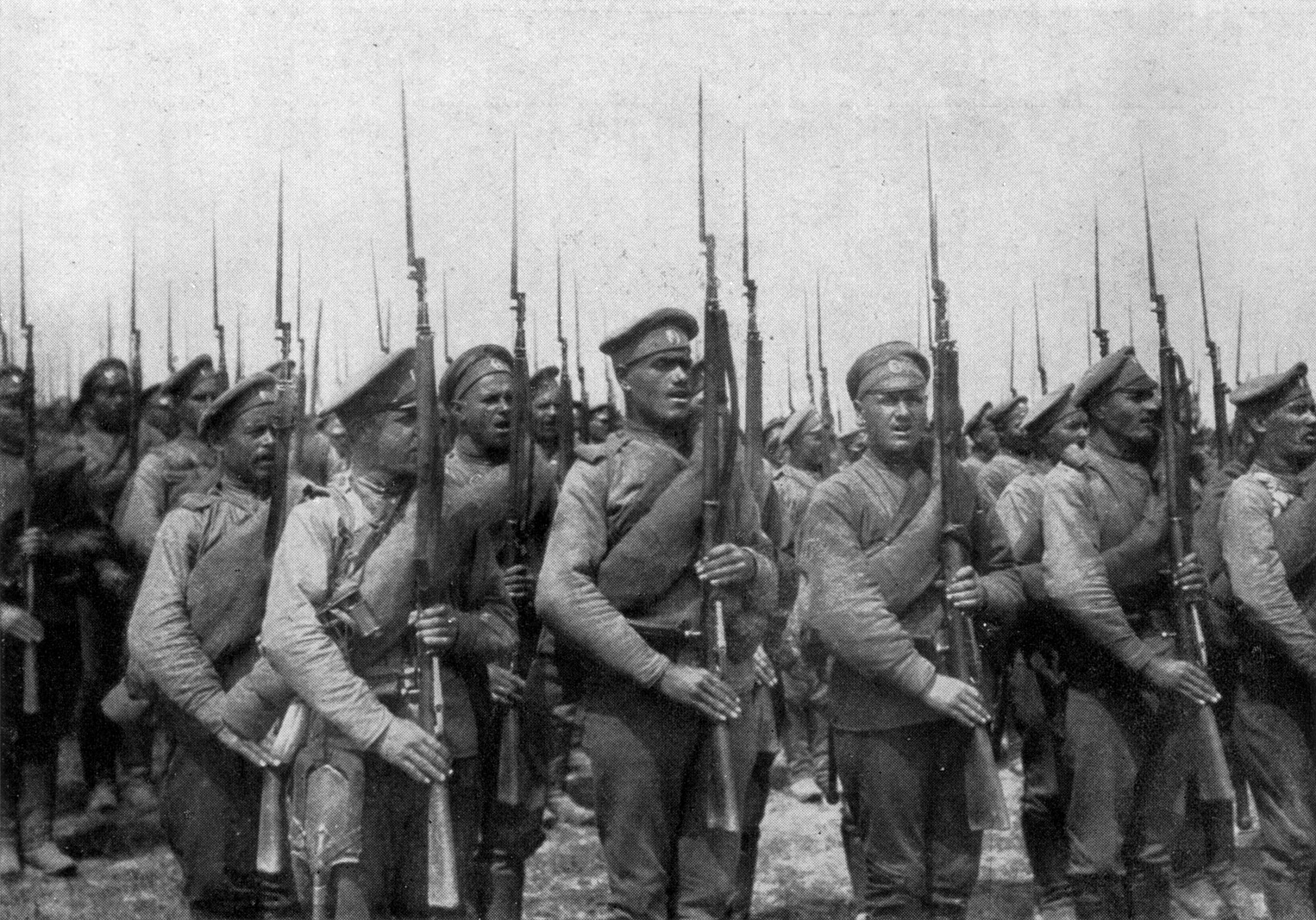
   The Red Army was the military machine of the Soviet Union and the Bolshevik Party. Created by Leon Trotsky from scratch in 1918 to combat the White armies, the Red's fought to defend the revolution. Initially the Red Army was formed entirely of volunteers. However, due to the support from western nations such as Britain, France and the United States for the White armies, conscription was adopted. During the Russian Civil War, the Red Army fought and eventually defeated the coalition of the White armies and the western powers over a three year period. The White armies that were defeated were made up of generals hoping to restore the monarchy and their own positions of power. These armies were not well coordinated and contributed much to their downfall. The Bolshevik Party consolidated power and the Russian revolution was won. Built within the structure of this fighting force was a cadre of political officers that enforced the party line, monitored morale, and reported back to the party on the conduct of officers. Included within the revolution itself was representation in the form of Soviets, or councils, of workers, peasant and soldiers. Officers could be heavily scrutinized and their conduct was always liable to be in question in the defense of those who the party was supposed to represent, the common soldier. These political officers could even question officers openly on the basis of party ideology. Throughout the entirety of the Great Patriotic War, Stalin used these political commissars to ruthless effect. Even the slightest suggestion of defeatism could result in execution. Special units were deployed behind the front line to forbid any soldiers from retreating. Anyone retreating would be machine-gunned by these squads. Before the war even started, tens of thousands of army officers including several of the highest generals were purged, executed for accusations of treason or sabotage or other various other false charges. After the war, the alliance the Soviets enjoyed with the west against Hitler's Nazi Germany broke down. The Cold War had begun. Throughout the decades of Soviet Russia, communist soldiers took part in proxy wars in countries like Korea and  larger scale involvement in nations like Afghanistan. During the Korean war, it became common knowledge among pilots of the United Nations, mainly American, that Soviet MIG's were being piloted by Russians along the Yalu River border between China and North Korea. This area became known as MIG alley and was not solely patrolled by Chinese and North Korean pilots. The Red Army's goal in Afghanistan was to support a communist party within the country. Casualties began to mount and the Red Army was ultimately unsuccessful, having to leave the country without victory. Over the course of communist power in Russia, the Red Army did what it was created to do. It challenged other powerful nations and capitalism from Eastern Europe to Far East Asia. The Red Army was the vanguard of the communist revolution from 1918 until the fall of communism in the early 1990's.


Sources

"Of Russian Origin: Red Army." Russiapedia. Web. 21 Apr. 2015.

Simkin, John. "The Red Army." Spartacus Educational. 1 Sept. 1991. Web. 23 Apr. 2015.

Wilde, Robert. "The Russian Civil War." About.com. Web. 22 Apr. 2015.

Monday, May 4, 2015

World War One: Tannenberg and the Masurian Lakes


   In the summer of 1914, Archduke Franz Ferdinand of Austria was assassinated by Gavrilo Princip, a Bosnian nationalist who Austria believed to be sponsored by Serbia. Russia, an ally of Serbia, came to the defense of its fellow Slavic nation. When Austria declared war on Serbia, mobilization in Russia followed, which resulted in a chain reaction that brought all of Europe into war. Russia, allied with England and France, known as the Allied Powers, fought Germany, Turkey and Austria, known as the Central Powers. The reigning monarchs of England and Germany and Nicholas II of Russia were all cousins, related to each other through Queen Victoria of England.


Russia's involvement in World War I was catastrophic to the point of violent revolution. The Eastern front as it came to be known started quickly for Russia. Russia attacked East Prussia with two armies. General Pavel Rennenkampf and General Alexander Samsonov commanded the First and Second armies, respectively, totaling 650,000. Samsonov and Rennenkampf hated each other passionately and did not coordinate themselves. The result was a decisive defeat by a much smaller German force of about 135,000. After four days of fighting the russian Second army under Samsonov was crushed, being almost entirely killed, wounded or captured. Only 10,000 men out of 150,000 walked away. Samsonov was so humiliated after the battle he committed suicide alone in the woods and the first army was left alone to fight the Germans. Rennenkampf was pushed back and ultimately defeated at the First Battle of the Masurian Lakes. What was left of the First and Second armies retreated back into Russia. The defeat was significant. These two battles were an ominous beginning to what would become a very costly war, both politically and socially.  The moral of the army was severly weakened and the lack of leadership was overwhelmingly evident. Throughtout the war, one Russian general above all, General Brusilov, seemed to effectively fight the Germans and Austrians. Before the war even started, Brusilov stated that he wouldn't be fighting for the Tasr, Nicholas II, but for Russia. Perhaps he knew that he would one day have to make a choice between the two. Certainly, the defeats and losses at Tannenberg and the Masurian Lakes made progress on the Eastern Front far more difficult thoughout the remainder of the war.


sources

Hickman, Kennedy. "World War I: Battle of Tannenberg." About.com. Web. 22 Apr. 2015.


The Battle of Borodino


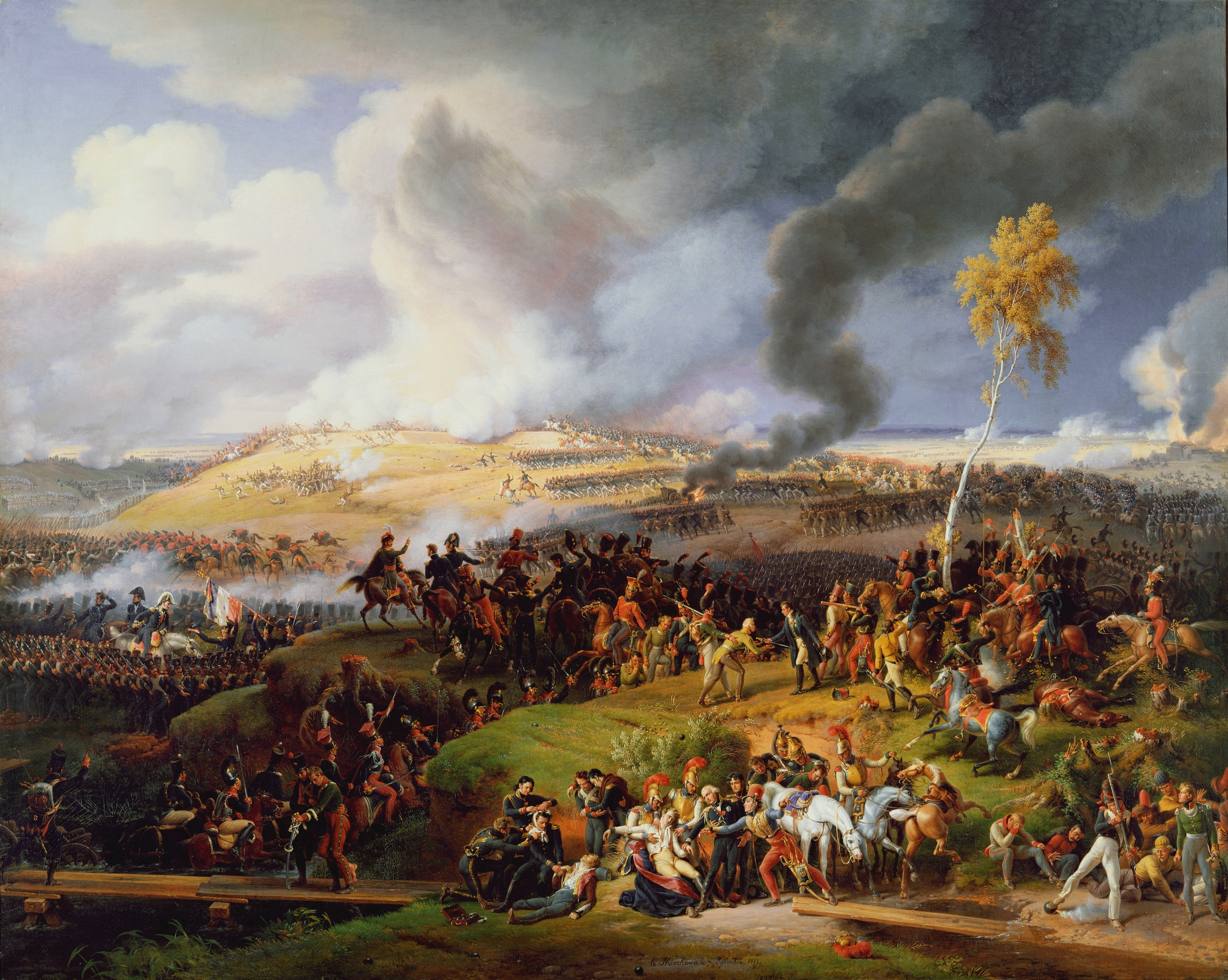
      Before 1812, Russia under Tsar Alexander I had signed a peace treaty with Napoleon's France known as the Treaty of Tilsit. This treaty made France and Russia briefly allied with each other against primarily Great Britain. However, part of the deal was Russia not trading with Britain. Not long after the ink was dry, Tsar Alexander came to realize that he could not survive without trading with Britain, causing a backlash from Napoleon and renewed war. Napoleon Responded with an invasion of Russia, aimed at taking the city of Moscow and succeeding. Napoleon failed to realize that Moscow was not Russia and Alexander never planned on talking terms with France.


Mikhail Kutuzov


     Count Michael Barclay de Tolly was unable to make a stand against Napoleon's Grand Armee column of around 285,000 men and continually retreated, scorching the earth. Frustrated with Barclay's performance, Alexander replaces Barclay with Mikhail Kutuzov. Kutuzov chooses the small village of Borodino to take up positions to defend Moscow. Using earthworks and hills, the Russian army was able to hold its own for much of the day, although it suffered up to 40 percent casualties out of up to 160,000 men. The Russian army's confidence however was on the rise. At the end of the day, The Russian's were not in disarray and were not demoralized, having held their own against the great Napoleon. It was at Borodino where Napoleon and his generals admitted lamentably that the invasion of Russia had failed. Too many french casualties were incurred and Napoleon's supply lines had become dangerously thin. The taking of Moscow was not much of a triumph for Napoleon and indeed proved fruitless. Weeks later when Napoleon finally retreated out of Russia, The army was strong enough to harass the French army all the way back to the Baltic and french held territory. The invasion of Russia ultimately crippled France and paved the way for Napoleon's exile to Elba. Even though Moscow had been surrendered and burned to the ground, Russia survived and regained her strength and military status.


Sources

Hickman, Kennedy. "Napoleonic Wars: Battle of Borodino." About.com.  2015. Web. 16 Apr. 2015.


Yemelyan Pugachev's Rebellion


   Yemelyan Pugachev was a cossack from a village along the Volga river. Little is known about Yemelyan Pugachev before his rebellion, but he would become well known to the Russian court and Catherine the Great. Pugachev was in the army in campaigns from the war against Prussia to the conflict against the Turks. His wish to be discharged from the military due to ailments was denied, in turn he deserted. Wandering through the country trying to evade the authorities, he settles among the Yaik cossacks. In 1772 these cossacks revolted and quickly turned to Pugachev for leadership due to his military experience. In a fit a brilliance, Pugachev declares himself to be Tsar Peter III, who the peasants and other Russians living in the countryside were not aware of the former Tsar's death. Claiming to be the rightful Tsar of Russia, he travels throughout Russia looting and taking revenge on the nobles he and his fellow rebels come across. Followers flocked to him due to their deterioating conditions, particularly as serfs, under the reign of Catherine. Most insurrections at this time were on a small scale and posed no threat to the state, however, this rebellion eventually ignited all along the Volga River. Seeing the success of their actions, peasants and the like rose up on their own some even joinging Pugachev, increasing even further Pugachev's military might. Pugachev was a remarkably shrewd military commander, attacking places where he could replenish his ammuntion and even aquire artillery. Catherine now took notice of the rebel leader and his fellow cossacks. Her hand would be forced to take serious measures against him. Eventually Catherine would end a war against the Turks to gather the appropriate forces to crush the rebels. The peak of the Pugachev rebellion came at the city of Kazan where Pugachev's rebels laid seige to the city and attempted to capture the citadel. After the failed seige of Kazan, Pugachev's forces began to splinter. After his forces began to lose their cohesiveness, all was lost. Seeing her opportunity to end the disease once and for all, Catherine issued a reward for Pugachev's capture which his former compatriots were all to eager to accept. Pugachev was eventually captured by his own men and turned over to the authorities who would eventually try and execute him publicly as a warning to all other would-be rebels. Pugachev's rebellion impacted the way nobles felt about their serfs, caused massive acts of vegeance by the nobles against them and did little to improve their lot. Catherine as a result of all of the violence and bloodshed strayed from her professed liberal and enlightened ideology and firther embraced the Tsarist, absolutist system. Serfdom would not be abolished for another century.


Sources


"Prominent Russians: Emelyan Pugachev." Russiapedia. Web. 10 Apr. 2015.


Sunday, May 3, 2015

The Great Northern War


   The Great Northern War took place over two decades and became a fundamental reckoning between Peter I of Russia and Karl VII of Sweden. Peter's goal was prestige and to gain a port to the north to allow money and knowledge to enter the country from the west as well as allowing Russia to become a naval power. Peter I loved the sea and wanted his country to take part in the commercialism of the day, along with his naval ambitions. Russia had many allies in the conflict including Poland-Saxony and Denmark, both of whom signed separate peace treaties with Sweden. In November of 1700, Peter's army laid siege to Narva and Ingria. In response, Karl, with a blizzard at his back, sent his eight thousand man army to attack Peter's army of twenty three thousand. Peter's forces were smashed and retreated to pull themselves together again. This great victory convinced Karl that Russia was merely a bear without teeth, and turned his attention to Poland. Four years later, Peter had invaded Swedish territory in the north at Dorpat and Narva in 1704 further irritating Karl. Karl invaded Russia in 1707 with himself leading one army and Count Lewenhaupt leading the other, attacking through Smolensk and Riga, respectively. Peter was defeated at Holowczyn but inflicted serious casualties upon the Swedes. While retreating, Peter used a scorched earth policy, leaving the advancing Swedish army without supplies to forage. Karl did not give chase, choosing instead to make his winter camp in Ukraine, unaware of the brutal winter on the way. In 1709 at the battle of Poltava, the Swedish army was crushed, leaving Karl stranded without a route to return to Sweden or even his other army, as Count Lewenhaupt had suffered a serious defeat at the battle of Lesnaya. Later, the war would move to Finland, where the Swedes would know little victory. The Swedish navy was routed at Hango and the last hope of victory for Sweden was lost at Tanning in Holstein. An alliance between Turkey and Sweden forced Russia into two front's, which would create a situation where Peter would be defeated by the Turks in the south at the Battle of Pruth during a failed invasion of Moldavia, losing influence around the black sea and even losing the city of Azov. Peter would make peace with the Turks, but not yet with the Swedes. Peace with Sweden would come in 1721, three years after the death of Karl, with the Treaty of Nystad, where Sweden Ceded Livonia, Estonia and Ingria to Russia and Peter returned Finland to Sweden. The Great Northern War proved to be a turning point in Eastern European history, with the positions of power being exchanged between one dying empire, and a Russia on the rise. Peter achieved the expansion he sought and at the same time eliminated his most potent and dangerous rival.


Sources

"The Great Northern War". HistoryLearningSite.co.uk. 2014. Web. 1 Apr. 2015.


Rickard, J. "Great Northern War (1700-1721)." Historyofwar.org. 24 Dec. 2000. Web. 30 Mar. 2015.

Karl XII of Sweden


   Sweden was the powerhouse of the Baltic sea region up until the early eighteenth century. Swedish naval and ground power were formidable and easily fended off lesser military powers. Karl VII of Sweden inherited a war machine from his father. When he came to power, he was chosen to rule rather than a regency of five, in part, due to his young age. His youth represented an opportunity for high nobles to mold the boy king in their image and under their guidance. However, Karl would prove to be a worthy military man who would take his armies from Denmark to Poland to Russia. Karl proved to be short sighted and overreaching and even got himself trapped in Turkey after a string of defeats. Karl's own personal ambitions for glory and empire directly affected the Russian empire. Had Sweden not incurred the wrath of several other kingdoms and electorates and focused all energy on subduing the Russians, Peter the Great may never had an opportunity to professionalize his armies in time to defend his crown and kingdom. Victories over the reigning Polish monarch Augustus II allowed him to install his own regent- Stanislas- on the Polish-Saxon crown, as the two were politically joined. Karl VII brought glory to Sweden, but at the same time hastened it's downfall. Swedish power was already on the decline and looking exhausted by the late seventeenth century, but Karl would take that to the extreme, eventually losing much of Sweden's possessions in the Baltic and Eastern Europe and forever relegating his nation to a second tier power behind the ever expanding Russian juggernaut. To add to the other misfortunes, while Karl was away on campaigns, absolutism of the monarchy was ended, being replaced by the "Age of Liberty". Karl VII would be killed by a shot to the head during the siege of Fredrikshald in 1718. However, Karl and his campaigns had a profound impact not just on Peter and his military beliefs and practices, but Russian history as a whole.


sources

"Charles XII of Sweden". HistoryLearningSite.co.uk. 2014. Web. 1 Apr. 2015.


Peter the Great


    Peter Romanov's early life was violent and tumultuous. After the death of his father, the ten year old Peter shared power with his brother Ivan and older sister Sofia. After Gaining the crown for himself, Peter went as far as to disband the streltsy, a kind of soldier-class in Russia, executing and deporting hundreds after they rebelled against him in the name of Sofia's family. Peter followed his passion of exploration and learning across Europe, educating himself in new technologies such as shipbuilding, medicine, engineering and navigation. Upon His return to Russia, Peter went through a wave of military reforms that would make Russia into the dominant empire in Eastern Europe. Before his reign, Russia's military was awash with amateurs from the privates to the generals. Noble officers typically could buy commissions and few armies, if any, across Europe knew anything resembling uniformity in competence, dress or drill. The reforms of Peter I would attain for Russia what it needed to expand westward, and that was a professional army and navy. To accomplish this, new taxes would need to be handed down, a port city would need to be obtained, and the pool of foot soldiers would need widening. A new form of conscription was implemented that included both nobles and peasants. The hiring of foreign experts gave Peter the cadre of experienced professional officers he so desperately needed. Most Tsar's before Peter I relied upon armies mainly consisting of serfs offered by landlord's for military service. Now, in addition to the serf offerings, villages and settlements would have to forfeit their young men for Peter's army and navy. The size of the army exploded over a 30 year period. During this time, Sweden was defeated and St. Petersburg could be established, under the close and watchful eye of Peter himself. One of his most dramatic acts was disbanding the rebellious streltsy and replacing it with his own boyhood creations- the Preobrazhenskii and the Semeovskii, the new elite guards regiments. Peter's new armies were well drilled and well trained. A new Russian empire could be forged off the back's of these men and indeed would be. New conquests in the north against Sweden's soldier king Karl XII would cement Sweden's downfall and Russia's rise to glory. During the Great Northern War, Peter would experience setbacks, but due to this new professionalism, the defeats would not prove to be detrimental to his goals by the end of the war. The naval victories over the Swedish in the Baltic and the Ottoman navy at Azov proved Russia's newly found competence. The sea was among Peter's great obsessions in life and he would see 48 ships-of-the-line built as well as 800 smaller combat vessels by the end of his reign. None of these reforms could have been undertaken without the iron will of an autocratic, multi-talented and multi-tasking ruler such as Peter the Great.


sources

"Peter the Great." Paper Masters. Web. 1 Apr. 2015. (photo)

Oliver, Meredith. "Peter I (The Great)." ThenAgain, 18 Dec. 1998. Web. 1 Apr. 2015.

"Peter the Great Accomplishments." History of Russia. 1 Jan. 2015. Web. 1 Apr. 2015.

"Peter the Great - Military Reforms". HistoryLearningSite.co.uk. 2014. Web. 1 Apr. 2015.